Wednesday, 6 May 2015

PREMIUM LENSES USED IN CATARACT SURGERY

A cataract is clouding of the natural transparent lens of the eye which prevents the light rays passing through it thereby causing decrease in vision.


Why Surgery ?
Cataract can be treated only with surgery and no medicines can cure or prevent the cataract progression. Cataract Surgery is planned when one faces difficulties to carry out regular daily activities due to decreased vision which no longer improves with spectacles.
With the help of surgery the cloudy natural lens is removed and is replaced with a transparent artificial intra-ocular Lens (IOL) thereby improving vision.

What are the various Lens options ?
Choosing a correct IOL with regards to the design as well as the power forms the cornerstone of any Cataract surgery. To cope with the lifestyle changes, having good crisp vision has become a necessity. A correct premium IOL can provide one with independence from glasses

What are Monofocal IOLs ?
Traditional monofocal IOLs correct only the distant vision and for the near and intermediate activities patient needs to wear glasses.


What are Premium IOLs ?
The spectrum of Premium lenses includes Multifocals and Toric IOLs.
Multifocal IOLs
These IOLs consist of a pattern of concentric rings which helps focus the light falling onto the lens at different foci thus provide simultaneous near and far vision.
The different Multifocals available are
Bifocal IOLs :
These IOLs comprise of the concentric rings that focus the light passing through them at two points providing functional distance and near vision.


Imperfect intermediate distance vision clarity becomes a limitation with such lenses as intermediate distance vision is especially important during daily activities such as computer use, cooking and other such activities.

Trifocal IOLs : 
To overcome the limitation of the bifocal IOLs the newer concept of Trifocal IOLs was developed.
These lenses are designed in a way that they can provide good quality distance, intermediate and near vision simultaneously and one is almost independent of glasses. 90-95 % spectacle freedom is achieved.

What are Toric IOLs ?
Astigmatism is a condition where the cornea of one’s eye is more oval, like a rugby ball than the normal almost spherical shape. By the virtue of astigmatism one develops a cylindrical power of the eye.
This cylindrical power is not fully corrected with the traditional Monofocal or Multifocal IOLs and the patient requires spectacles for distance as well as near to overcome the blur caused by this kind of power even after cataract surgery in such cases.


A Toric IOL is premium IOL which can correct this cylindrical power as well and hence provide better vision quality when compared to the traditional non-toric options.

A Multifocal toric provides the greatest spectacle freedom

Monofocal Toric


Multifocal Toric
Benefits of Premium Lenses
  • Multifocal IOLs offer good vision not only at distance but also for near without the use of glasses or contact lenses as against the traditional monofocal lenses in which one requires to wear glasses for near activities.
  • Trifocal IOls provide a good quality vision simultaneously for near, intermediate and far distance giving patients freedom from eyeglasses.
  • Toric monofocal IOLs correct the cylindrical component of the eye power making the patients with astigmatism spectacle free for distant vision after cataract surgery.
  • Toric multifocal IOLs provide highest quality of spectacle freedom for patients with astigmatism.
For more details contact us..

Wednesday, 4 February 2015

Retinal Surgery in India

Retinal Detachment :

Retina is said to be a layer inside the eye which is light sensitive in nature. This is the layer which sends the visual messages to the brain through optic nerve. The retina is said to be detached when it is pulled or lifted from its normal position. Even vision loss can be caused due to retinal detachment if it is not treated properly.

Krishna Eye Center, Mumbai is one of the famous and well known hospital which provides best Retinal Surgery in India.

Types Of Retinal Detachment :

There are mainly 3 Types of retinal detachments. They are

  • Rhegmatogenous
  • Trectional
  • Exudative


Rhegmatogenous :

This is the most common type of retinal detachment. This is caused when a break or tear in the retina leads the fluid to get settled under the retina causing retinal detachment. Here retina get detached from its nourishing layer which contains a retinal pigment called as epithelium.


Tractional :

This is the less seen detachment. In this retinal detachment, the scar causes the retina's surface to contract, leading to detachment.

Exudative : 

This the the detachment which is caused due to retinal diseases including inflammatory disorders and trauma. This detachment is caused by the leaking of the fluid to the area under the retina. But there will not be any tears or breaks in the retina.

Risk Factors or Causes of Retinal Detachment :

There is no age for retinal detachment. It can be caused in any age. But there is more risk to happen in people who is aged more than 40.

The other causes includes,

  • People who are highly short sighted.
  • Having a family background of retinal detachment.
  • People who have undergone a cataract surgery in the past.
  • Having another eye diseases.
  • An early eye injury.


Symptoms of Retinal Detachment :

The main symptoms of retinal detachment includes

  • Appearance of floaters in the vision.
  • Light Flashes appearing in the vision.
  • Narrowing of vision.


Treatment :

  • At the early stages, small tears or holes can be treated by using lasik surgery and cryopexy.
  • Another option for retinal detachment is retinal surgery which requires the patient to stay in the hospital. 


For more information visit our site or contact us.
Website : www.krishnaeyecentre.com
Our mail id : krishnaeyecenter@gmail.com


Sunday, 21 December 2014

Effective Glaucoma Surgery in Mumbai

What is Glaucoma?

Glaucoma is a condition that causes harm to your eye's optic nerve and became dangerous when kept untreated. It is frequently connected with the development of  pressure inside the eye. Glaucoma has a tendency to be inherited and may not appear until the desired time.

The created pressure which is called as the intraocular pressure, can harm the optic nerve. This optic nerve is responsible for the transmission of images to the brain. If this damage to the optic nerve due to the pressure continues, the glaucoma can leads to the permanent vision loss of the patient. So without treatment glaucoma can lead to total blindness within a few years.

About 50% of the people with glaucoma doesn't show any early indications or pain due to this pressure. So every one should see an eye doctor regularly as possible since this can diagnose glaucoma at its early stage and thus can avoid the danger of losing the vision permanently.

If you are a diabetic patient or have an family history of glaucoma, then the chances for getting glaucoma is very high. So its better for those persons to undergo a comprehensive eye checkup.

Krishna Eye Center in Mumbai is one of the famous hospital providing high quality Glaucoma Surgery in Mumbai.


Causes of Glaucoma:


  • Glaucoma can be caused if you are aged over 40.
  • It can be caused as hereditary.
  • It can be caused due to diabetes.
  • It can also happen due to the use of steroids.
  • Due to any early damage to the eyes.


Symptoms of Glaucoma:


  • Visibility of halos while looking to lights.
  • Loss of vision.
  • Eyes colour changes to red.
  • Eyes became cloudy.
  • Vomiting tendency.
  • Eye pain.
  • Vision seems to be narrowed.


Diagnosis of Glaucoma:


  • Measuring the intra-ocular pressure by the method known as Applanation Tonometry.
  • Checking the corneal thickness by Pachymetry.
  • Optic disc is viewed by Ophthalmoscopy.
  • To evaluate the changes happened in the optic disc by using Fundus camera.
  • Mapping the functioning of optic nerve by the evaluation of the vision of each eye by using Visual Field Test.
  • To find out the early damages of the nerve fibers by using OCT.
  • Glaucoma type can be found out by using the Gonioscopy.


For more details about glaucoma CLICK HERE
Contact us by sending a mail or through our site..

Our mail id : krishnaeyecenter@gmail.com
Website : www.krishnaeyecentre.com


Saturday, 6 December 2014

High Quality Squint Treatment at Affordable cost in Mumbai

 What is Squint?

Squint is an eye disorder which results in the misalignment of eyes. Due to this problem both the eyes will not look like the same. Because of this there will occur other serious problems also. This may vary in accordance with the individuals. Now a days this disorder became common in children, but it is also seen in adults.


Krishna Eye Center, Mumbai which is having the best Hospital Infrastructure in Mumbai provides a high quality treatment for Squint at an affordable rate. This hospital is also famous for its well known Pediatric Ophthalmologist in India.

Squint in Children

Squint is now mostly seen in children


  • Squint in children is considerable only if the child is more than 2 months since the eyes of a newborn baby is rarely aligned during the first 2 months.
  • Squint damages the vision of the child.
  • Squint have to be treated at its early stage itself, otherwise it leads to losing of vision.
  • If the child grows with squint then regaining of lost vision become difficult.


What Leads to Squint?

The factors that may leads to Squint are


  • In some cases squint may occurs without any reasons.
  • Sometimes squint may occur hereditary.
  • Some infections in eyes may cause squint.
  • Other disorders like retinal diseases, tumors, glaucoma, cataract and optic nerve  diseases may sometimes leads to squint.
  • Due to weakening of eye muscles this misalignment takes place.
  • One of the major reason for squint is the abnormal impulses received by the eye muscles.
  • This may be also caused because of refractive errors.


Symptoms of Squint

The Symptoms shown by the effected persons are


  • Misalignment of the eyes.
  • Sometimes the effected ones will close the effected eye on looking to the sunlight.
  • In the case of children, they tilt and turn their heads for co-ordinating the vision through both eyes.
  • Double vision is another symptom shown by the effected persons in some cases.


Treatment for Squint

Squint can be treated according to the way of happening.


  • In some cases Squint will be due to refractive errors. In such case Non-surgical Treatment like use of spectacles is enough.
  • In other cases Surgical Treatment is suggested, which includes 3 steps : Vision Regaining, Alignment of Eyes, Binocular vision rectification.


For more information CLICK HERE
Contact us by sending a mail or through our site

Our mail id : krishnaeyecenter@gmail.com
Website : www.krishnaeyecentre.com


Saturday, 8 November 2014

Affordable Cost Eye Treaments for Children in Mumbai


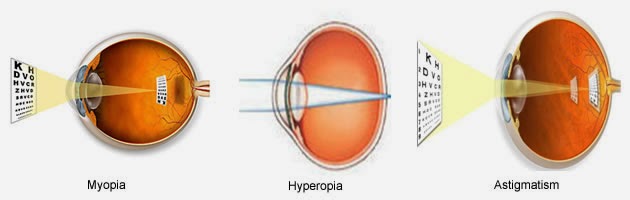
When light rays from a distant object do not come to a focus on the retina, the image of the object appears blurred and the condition is called Ametropis.

http://www.krishnaeyecentre.com/lasik.php

When the size of the eyeball is longer than normal, these light rays are focused in front of the retina. This is Myopia or short sightedness. This can be corrected by concave lenses as spectacles or contact lenses.
When the size of the eyeball is shorter than normal, these light rays are focused behind the retina. This is Hypermetropia or long sightedness. This can be corrected by convex lenses as spectacles or contact lenses.
A normal eye has spherical cornea in all its meridians. When the cornea is steeper of flatter in any of its axii it gives rise to Astigmatism. This is corrected by cylindrical lenses as spectacles or toric contact lenses.
Parents should encourage the sporting activities and provide a balanced diet rich in vegetables, milk products, salad, fruits and avoid junk food to maintain good eye health and overall health of their children.

http://www.krishnaeyecentre.com/paediatric-services.php
Amblyopia is commonly known as lazy eye. This should not be confused with squint. Amblyopia is poor vision in an eye that could not develop normal sight during early childhood.
At the age of eight years, the development of the part of the brain that processes vision is almost complete. If the brain has not received clear images from the weak eye, it starts neglecting this eye. The eye is then said to be amblyopic or lazy as the vision does not develop.

  • Refractive errors such as Short Sightedness, Long Sightedness or Astigmatism.
  • Large difference in spectacle powers between the two eyes.
  • Strabismus or squint.
  • Obstruction of vision by droopy eyelid, cataract or other diseases.
Management
Successful treatment depends on how severe the Amplyopia is and the age of the child when treatment begins. If the problem is detected early, successful treatment is possible and treatment time is shorter, if it is detected after the age of 8 years the success rate will be low.
..Spectacles
The child should be encouraged to wear his or her spectacles as much as possible throughout his waking hours if he or she is being treating for Amblyopia.
..Patching
The treatment consists of patching the GOOD EYE, so that the affected eye is made to work and the child is encouraged to see with it. It requires a tremendous amount of co-operation and understanding by the parents.
..Pharmacological treatment
Sometimes we prescribe some medications to help the amblyopic eye see well.

Squint or crossed eye is a condition where both eyes do not move together. One eye deviates either inwards, outwards, upwards or downwards while the other eye remains straight. It may also be alternating between the two eyes. Refractive errors are the most common causes of the squint, the other being lazy eye, nerve or muscle weaknesses and injury.
Management
http://www.krishnaeyecentre.com/squint.phpTreatment of squint requires a combination of glasses, exercises and surgery. Surgery may be needed in one eye or both eyes depending upon the squint, essentially it is a combination of loosing or tightening of eye muscles.
It is important to correct squint as it can lead to deep Amblyopia and psychological problems in children, loss of binocular vision, and loss of depth perception. Many simple activities like threading a needle, ability to understand the depth of staircase or liquids in a glass and functioning on a microscope become difficult.

Normally the tears are formed by the tear glands in the eyes and are drained off through two holes in the corners of the eyelids called punctae into the nose through a duct. The entire drainage system is called as Nasolacrimal duct system. Sometimes there can be a block at any level, at the punctum or in the ducts which may fail to open after birth resulting in persistent watering or discharge from the eyes. If left unattended this can lead to infection and painful swelling near the bridge of the nose.
Management
..Massaging
http://www.krishnaeyecentre.com/
70 to 80% of times the duct opens on its own time. Massaging the tear ducts is important to open the ducts. Massaging is done with the thumb or the forefinger, the stroke is to be firm and in the direction from the eyes to the nose downwards and inwards.
..Probin
If massaging fails a wire probe might need to be passed through the duct forcing it to open. This is done under anesthesia or sedation in small children.
..Lacrimal Duct Surgery
If the above methods fail to open the blocked ducts, surgery is recommended in children above 1 year of age. The surgery is done under general anesthesia.

Introduction
Cataract can affect a child as young as a new born baby. Cataract in children cause severe damage to the development of vision and needs to be treated as an emergency.
There are various causes of cataract in children like hereditary, genetic, infectious, metabolic, eye injuries etc. It is not possible to ascertain the cause in every child.
http://www.krishnaeyecentre.com/cataract.php
However, sometimes investigations are needed to find the cause as they have a big impact on child's life span and future quality of life.
What is the treatment for Cataract?
  • The treatment of cataract in a child is usually by surgery at the earliest.
  • Cataract surgery in a child is totally different as compared to a cataract surgery in adults. There are many issues that are to be dealt with in a different manner in terms of examination as well as surgeries.

http://www.krishnaeyecentre.com/diabetic-eye-treatment.php
ROP is a disease affecting the retina of premature infants. Very often premature babies are kept in tents of hyperbaric oxygen until they become fit to breath normally. The incidence of ROP is on a rise, this is due to improved survival rates of very low birth weight and extremely premature infants. The hyperbaric oxygen instigates the growth of abnormal vessels from the retina. The key disease element in ROP is growth of abnormal blood vessels with increased risk of bleeding or developing retinal detachment.
  • Which babies are at risk? Who should be screened?
The criteria for screening babies are based on two critical factors – the birth weight and the gestational age. In general infants with birth weight less than 1700 grams and gestational age below 34 weeks need screening.
  • When should screening be done? How frequently should the child be examined?
As a rule of thumb 1st screening should be over by Day 30 of baby's life. Very small babies (Weight < 1200 grams or < 24 weeks age) need to be screened within 2 weeks. Depending on the stage of the disease immediate treatment or repeat exams may be required.
  • What is the treatment for ROP?
Treatment is in the form of Retinal Lasers and surgery if Retinal detachment develops.


Krishna Eye Centre provides best treatment for your child.....

For more details our hospital, you can visit our site : www.krishnaeyecentre.com

http://www.krishnaeyecentre.com/
For other information you can directly contact us!!!
Email : krishnaeyecenter@gmail.com

Thursday, 2 October 2014

Best and Effective Solution for Your Dry Eye Problem in Mumbai


dry eye
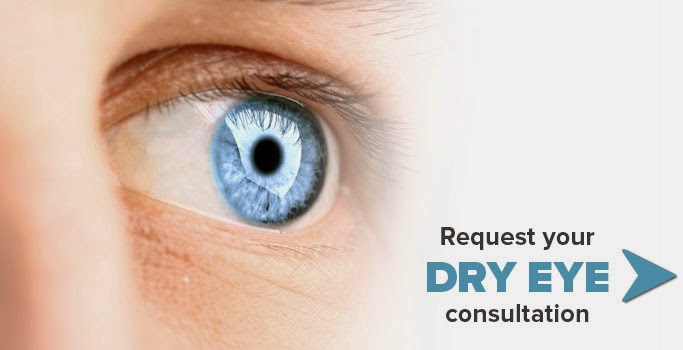
Very often we find our eyes turning red, watery and heavy by the end of the day. This is frequently associated with headaches, neck strains and backaches. The eyes might feel gritty almost as if some sand has fallen into them. It becomes difficult to look at bright lights. One can find it difficult to focus and concentrate while working on computers and reading. Doubling of vision can further make one miserable.

Between the eyelids and the eye surface (the conjunctiva and the cornea) there is a coupling fluid called the ocular surface providing lubrication, nutrition and protection.
In a number of conditions this tear film becomes deficient. Either not enough natural tears are being produced by the eye or the tears are evaporating more than required or both these issues are coexisting leading to a severe imbalance in the tear cycle.

Tear are secreted by the lacrimal glad and several small glands in our eyelid.
Inflammatory conditions of the lids such as crusting, dandruff or blockage of the minute lid gland ductules with lipids or pus, and eye lid deformities that do not allow the lids to close well can lead to tear deficiency. 
Meibomian Gland Dysfunction
Blepharitis : Crust seen at lid margin


Acute and Chronic inflammations of the lacrimal glands severely reduce tear production as damage to the glandular tissue reduces its capability to secrete tears. Allergies and skin acne can also contribute to decreased tear production.
Normally we blink about 16 times a minute without our knowledge, this blink rate decreases during any act of concentration such as reading or working on computers leading to evaporation of the tear film. Air conditioners with strong air blowers accelerate evaporation.
Very hot and dusty environment also contribute to allergy which leads to dry eyes.
Contact lens wear and certain eye surgeries like LASIK can lead to reversible dry eyes.
Vitamin A deficiency and certain drugs can reduce tear production.

A visit to the eye doctor / ophthalmologist will help come to the right diagnosis.


Some special simple tests like :
  • SCHIRMERS TEST
    dry eye


  • TEAR BREAK UP TIME TEST
    dry eye


  • TEAR FILM BIOCHEMISTRY ANALYSIS in selective cases might be required.
The ophthalmologist will prescribe certain eye drops and tablets.
Special type of eye wear / frames might be suggested.
Warm compresses, lid hygiene and eye exercises might need to be done on a regular basis.


Computer Vision Syndrome (CVS) is a group of eye and vision related problems caused due to excessive, uninterrupted focusing of the eye on the computer screen or smart phones for an extended period of time.

Eye strain, Headache, dry eyes and Difficulty in focussing on to objects. Burning, stinging and increased sensitivity to light.

http://www.krishnaeyecentre.com/dry-eyes-treatment.php

Uncorrected refractive errors like Myopia, Hypermetropia and Presbyopia are to be corrected with help of glasses, contact lenses or Lasik. Computer glasses are designed to give maximum vision at 20 to 28 inches, this is the distance at which the computer screen is normally placed, and this is not the same as reading glasses which work best at 14 to 16 inches distance from the eye.
Anti reflective coating on the spectacle glasses and computer glare screens filter and reduce the glare from the computer screens.
Frequent blinking keeps the eyes lubricated and looking away from the computer screen at 20 minutes intervals relaxes the eye muscles thus reducing eye strain.
The computer screen should be below the eye level, the viewing angle of the monitor should be 20 degrees below eye level, the reading material should be above the keyboard below the monitor to minimise discomfort while typing, the arms, back and neck should be positioned comfortably to avoid strain.
Use of lubricating eye drops is recommended to computer users to reduce dry eyes.
The room should have good lighting but not too much brighter as this can add to the glare off the computer screen.


If you’re one of 100 million people who suffer daily from dry eyes, The Krishna Eye Centre, Mumbai offers comfort and relief with a variety of treatment options. People who suffer from dry eyes include those who : 
  • Wear contact lenses, especially for prolonged periods of time
  • Are taking medications such as antihistamines or birth control pills
  • Are over 50, especially women going through menopause
  • Have specific diseases such as Sjogren’s Syndrome, rheumatoid arthritis and collagen vascular disease
  • Have eyelids that don’t close properly due to structural abnormalities  
  • Live in dry climates
You don’t have to suffer from dry eyes any more. Ask our eye doctor for getting proper treatment at affordable cost.


contact us


EMAIL : krishnaeyecenter@gmail.com

Wednesday, 6 August 2014

LASIK EYE SURGEY @AFFORDABLE COST IN MUMBAI

Laser assisted in situ keratomileusis or LASIK is an outpatient surgical procedure used to correct refractive errors like myopia, hyperopia and astigmatism. With micro-surgical equipments and laser, the cornea is reshaped so that the rays of the light are focused on the retina. Lasik reduces the dependence on glasses and contact lenses and offers true spectacle freedom. It is an outpatient surgical procedure done under topical anaesthesia. The entire procedure takes about 7 to 8 minutes per eye.


http://www.krishnaeyecentre.com/lasik-services.php

Can Lasik Be Done On Everyone?

Anyone who is over 18 years of age and has had a stable glasses prescription for over 12 months can undergo LASIK. The eye should not have any eye disease or eye injury and its complications. One should have realistic expectations.
There are however some very stringent patient selection criteria that one has to adhere to, in-order to give good results. The doctor is the best judge to select the patient for this procedure.

What Are The Special Eye Tests Required?

Corneal Topography & Aberrometry:

This test evaluates the corneal curvature or shape of the cornea and other refractive parameters of the eye. People with conical cornea are not fit for LASIK.

Corneal Pachymetry:

An optimal corneal thickness measured in microns is important fro LASIK as very thin sufficient tissue available to reshape the cornea and eliminate the eye power during surgery. Also very thin cornea can have problems after the surgery.

Retina:

Patient with retinal disease might need to get the disease treated before surgery. Several people with high minus powers have retinal weakness and fraying of peripheral retina which can be darned before Lasik.

Others:

Patients with dry eyes and squint and those who have poor color contrast might require additional management apart from LASIK to get best visual outcome.

http://www.krishnaeyecentre.com/lasik-services.php

Types of Lasik

  • Conventional LASIK or Blade LASIK in which a flap is created be an instrument called microkeratome then lifted and the bed below the flap is lasered. This type of LASIK is suitable in almost 90% of eyes.
  • Femto second LASIK is the bladeless Lasik; the flap is created by the laser itself.
  • Sometimes a Lenticule is cut out in the stroma of the cornea by the laser and sliped out of a small opening this is called Relex Smile. The advantage here is that eyes with thinner cornea can undergo this procedure and healing time is shorter.
http://www.krishnaeyecentre.com/lasik-services.php

Side Effects

Side effects are few, but people may experience discomfort or pain, blurry vision, dryness, glare and haloes around lights. There may be a red patch on the white of the eye, which may persist for a few days. Fluctuation in vision and the quality of vision may vary for some time. Vision may take up to 3 months to stabilize in some cases. Flap related complication and infection are rare.

FAQs

Does LASIK hurt?

LASIK is a painless procedure done under eye drop anaesthesia. One may fell slight pressure on the eye during the flap creation.

How long does it take to do a LASIK?

The actual procedure takes about 10 minutes; the laser itself takes only 20-50 seconds to correct the vision.

When can one resume normal activities?

Visual recovery takes from one day to a week. Majority of patients resume normal activities one to two days after surgery. Complete stabilization can take up to 2-3 months.

When should one stop wearing contact lenses?

Contact lens wearer should discontinue lenses at least a week before the procedure to allow the cornea to take its normal shape before the surgery for the best surgical outcome.

What is vision like after LASIK?

It is important to have realistic expectations. Over 98% of people achieve 6/6 to 6/9 vision without glasses or contact lenses. LASIK corrected vision is permanent however if refractive error is under corrected the result can be fine tuned by a second surgery called enhancement. People beyond 40 years of age can also undergo LASIK for distance vision but will need glasses for reading after surgery.
Those patients who are keen to be spectacle free but unfortunately do not qualify for LASIK can opt for other surgical procedure like Implantable Collamer Lens / Implantable Contact Lens (ICL) or Refractive Lens Exchange surgeries. Kindly contact us to know more about these procedures.

Doctors in Krishna Eye Centre Provides high quality treatment for all eye problems like cataract surgery / cataract treatment, glaucoma, refractive errors, diabetic retinopathy, squint, lazy eye etc.

For getting Spectacle Free Vision without pain, Contact US.

Email : krishnaeyecenter@gmail.com
http://www.krishnaeyecentre.com/contact.php